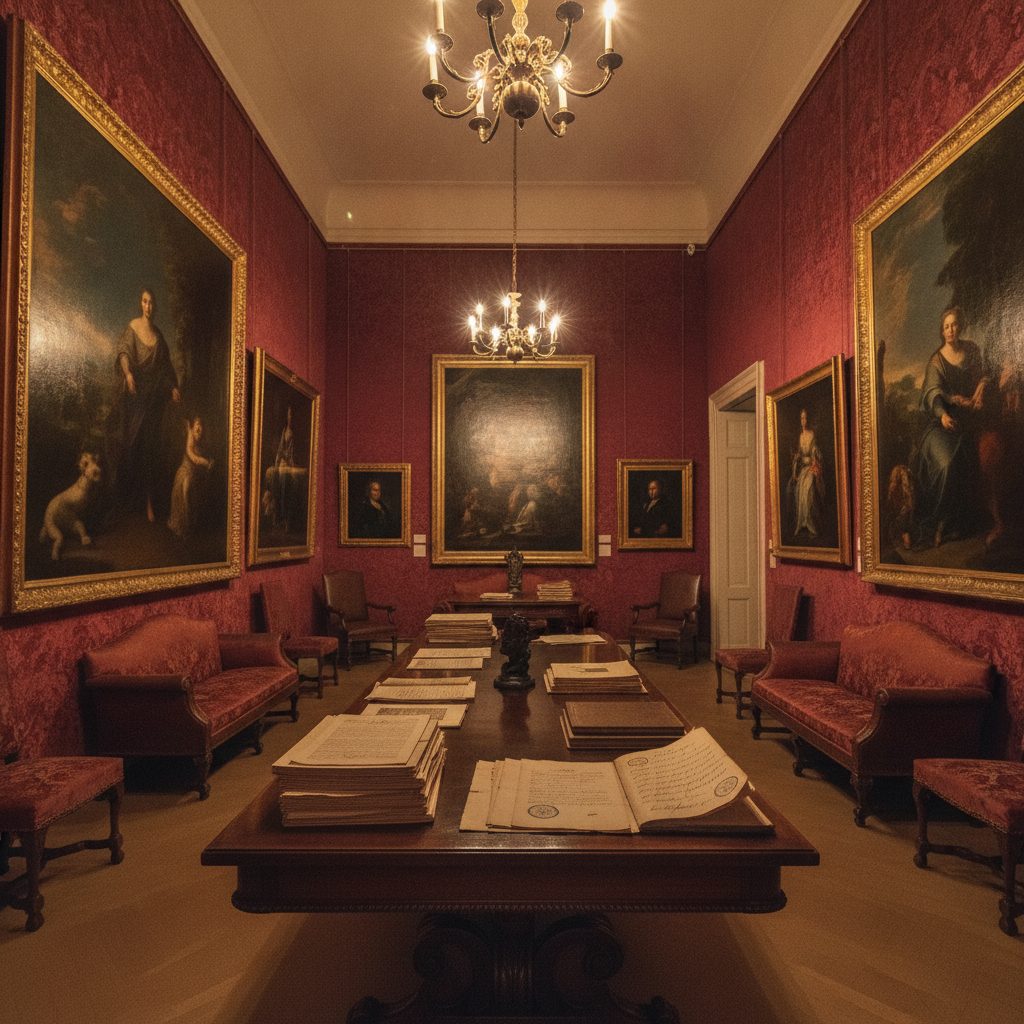
There is a word that decides the fate of old paintings more often than beauty does: provenance. It means the documented history of a work — the chain of hands it has passed through from the artist's studio to the wall in front of you. In the world of older art, that paper trail can matter as much as the brushwork itself, and understanding why is the first real step toward collecting with confidence — a different discipline from starting a collection of modern, reductive work.
What provenance actually is
Provenance is a biography of an object. Ideally it runs unbroken from creation to the present: the artist, the first buyer or patron, each subsequent owner, every auction it passed through, every exhibition it hung in, every scholarly book that mentioned it. A painting with a rich, continuous provenance — "collection of a named duke, then a famous dealer, exhibited in 1890, published in the catalogue raisonné" — is far more valuable and far safer to buy than an identical-looking picture that simply appears from nowhere.
Provenance does three jobs at once. It supports authenticity (a credible history makes a fake much harder to sustain). It establishes legal title (that the seller has the right to sell). And it adds value and romance — a work once owned by a king or a celebrated collector carries a premium precisely because of the story.
In older art, you are not only buying an object. You are buying its history — and the proof of that history.
Attribution: whose hand?
Closely tied to provenance is attribution — the judgement of who actually made the work. The auction world uses a careful, coded language you should learn to read, because each phrase means a very different price:
- "By [Artist]" — in the cataloguer's opinion, a genuine work by that master.
- "Attributed to [Artist]" — probably by the artist, but with some doubt.
- "Studio / workshop of" — made in the master's workshop, under supervision, perhaps with their touch.
- "Circle of" / "follower of" — by someone working in the artist's style and era, but not the master.
- "After [Artist]" — a later copy of a known composition.
The visual difference between "by" and "after" can be almost invisible; the difference in price can be a factor of a thousand. Never skim this line. The 2026 rediscovery of a lost Rembrandt — sold in 2014 as an anonymous Dutch picture — shows exactly what that one word can be worth.
Condition and restoration
Old paintings have lived long lives, and few have survived untouched. A condition report — which any reputable seller will provide — records damage, repairs, relining, and how much of the surface is original versus later overpaint. Sensitive restoration is normal and acceptable; heavy, clumsy repainting can hollow out both the beauty and the value. If you are spending seriously, commission an independent inspection, ideally including examination under ultraviolet light, which reveals restorations invisible to the naked eye.
The shadow on the trail: gaps and looting
Provenance also carries an ethical weight. A break in the record — especially covering the years 1933–1945 — is a serious red flag, because vast numbers of artworks were looted during the Nazi era and restitution claims continue to this day. Responsible buyers and the major auction houses now research these gaps carefully. A missing decade is not just a scholarly inconvenience; it can mean a work is not legally, or morally, the seller's to sell. Clean, transparent provenance protects you from inheriting someone else's theft. For a vivid case of how a wartime gap can shape a painting's fate — and its price — read the story of Klimt's Portrait of Elisabeth Lederer.
How to begin, sensibly
- Buy from reputable sources — established galleries and the major auction houses stand behind their attributions and provenance research, and offer recourse if something is wrong.
- Demand the paperwork — provenance history, condition report, and a clear invoice describing the work, its attribution and dimensions.
- Start where the risk is lower — antique prints, drawings and works by minor but genuine period artists offer real history at gentle prices, and teach you the market before you commit to a major picture.
- Buy what you love — the oldest advice remains the best. Provenance protects your money, but affection is what makes living with a painting worthwhile.
To collect older art well is to become, in a small way, its next custodian — the newest name in a chain that may stretch back centuries. Read the history as carefully as you read the painting itself, and you inherit not just an object, but a story you can prove and pass on. The rediscovery of Berthe Morisot is a modern reminder of how much a single name in that chain can come to matter. And for a case where the chain of owners mattered more than the object itself, see how a bronze copy of the Laocoön outsold the market on the strength of its pedigree.