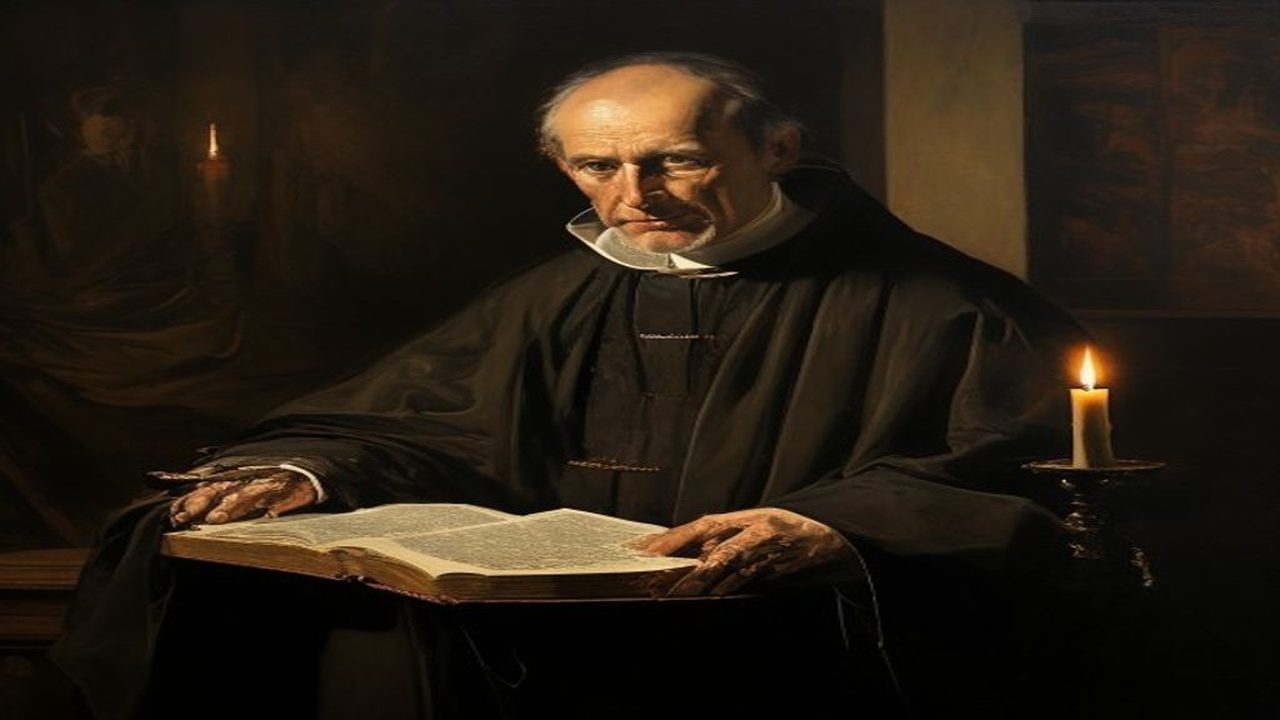
For most of a century, one of the earliest works by the first famous woman painter of the Renaissance existed as a rumour and a photograph. The rumour was that Sofonisba Anguissola — the Cremonese noblewoman whom Michelangelo praised and Philip II of Spain summoned to his court — had, at barely twenty, signed and dated a portrait of a preaching cleric. The photograph was the only proof: a single black-and-white image, filed away in a New York research library, taken from a sale sometime in the 1920s. After that, nothing. The painting itself had simply walked off the edge of the record.
It turns out it had walked, eventually, to a house in Durham, North Carolina. There, hanging on a private wall, was Portrait of a Canon Regular — Anguissola's earliest signed and dated painting, made in 1552, presumed lost for the better part of a hundred years. Its reappearance is one of the quiet sensations of the current season, and like the best rediscoveries it turns less on luck than on the patient work of looking, and on an owner who happened to know exactly what they had.
The prodigy from Cremona
To feel the weight of the find, you have to know who made it. Sofonisba Anguissola (born around 1532 in Cremona, in northern Italy) was an anomaly on almost every count. In an age when nearly every painter learned the trade in a father's or a master's workshop, she was the daughter not of an artist but of minor nobility — a father, Amilcare, ambitious enough to give his daughters a humanist education and to arrange for Sofonisba to study with local painters, a rare and slightly scandalous arrangement for a young gentlewoman.
The gamble paid off spectacularly. Her drawings reached Michelangelo, then the most famous artist alive, who praised the young woman's work and, by tradition, set her the exercises that sharpened her. Word travelled. In 1559 she was called to Madrid to serve Elisabeth of Valois, the third wife of King Philip II of Spain, as lady-in-waiting, drawing teacher and, in effect, court painter — a post she held for some fourteen years. She lived into her nineties, dying in 1625, celebrated to the end; the young Anthony van Dyck is said to have sought her out in old age and filled a page of his sketchbook with her advice. She belongs, in other words, in the same conversation as the men we file under the Renaissance masters — and for centuries the history books quietly left her out.
Fewer than twenty signed paintings by Anguissola survive. To recover one from the very start of her career is to recover a fixed point where almost everything else is guesswork.
A young painter's calling card
What makes Portrait of a Canon Regular so valuable to scholars is not that it is her grandest picture — it is not — but that it is her earliest signed and dated one. Painted in 1552, when Sofonisba was about twenty, it is essentially a young artist's calling card: proof of exactly what she could do, and precisely when.
The sitter is an unidentified canon regular, a member of a community of ordained clergy who lived under a monastic rule. Anguissola catches him mid-lecture, in the middle of a thought, his right hand laid flat on the open pages of a Bible turned to the Gospel of John — a detail underscored, in the composition, by the eagle that is Saint John's traditional symbol. It is a portrait of a man in the act of teaching, and it already shows the quality contemporaries prized in her: a warmth and psychological immediacy, a sense that the person might resume speaking the moment you look away. That liveliness is exactly what the training of the period taught a viewer to notice, the kind of close attention we describe in how to read a masterpiece.
It is worth being honest about scale here. Fewer than twenty signed paintings by Anguissola are known to survive, which is part of why any one of them matters so much — but it also means the map of her early career is drawn largely from inference. A firmly signed, firmly dated work from 1552 is a rare anchor: something the rest can be measured against rather than merely guessed at.
A hundred years as a photograph
The strange middle of the story is the long silence. At some point the painting entered the art trade, surfaced at a sale in the 1920s, and was photographed — a routine record shot that ended up in the Frick Art Reference Library in New York, the great photographic archive of Western painting. And there the trail simply stopped. For decades the picture was, to the people who study Anguissola, an image without an object: a face they could examine but a painting they could not find. It was known to exist and impossible to see, which is its own peculiar kind of loss — the same quiet erasure that has swallowed and later given back paintings as significant as a young Velázquez portrait of the Count-Duke of Olivares.
Meanwhile the painting was doing the least dramatic thing an old master can do: hanging on a wall. The North Carolina family who owned it had bought it at a local auction in 1977. They knew, from the signature, that it was by Sofonisba Anguissola — they were not living with an anonymous curiosity. What they did not have was the context that would tell them their picture was the very one the specialists had been mourning as lost.
How a lecture closed the circle
The bridge, when it finally came, was scholarship made public. Michael Cole, an art historian at Columbia University and the author of a monograph on the artist, gave a lecture on Anguissola that was recorded and posted online by the National Gallery of Art in Washington. The owners in Durham watched it. Recognising their own painting in what the specialists were describing, they reached out to Cole — and the century-long gap between the photograph in the Frick and the canvas on the wall abruptly closed.
That is a more fragile chain than it sounds. It depended on a serious scholar bothering to speak to a general audience, on a museum putting that talk where anyone could find it, and on owners attentive enough to connect a lecture to the object over their mantel. Rediscovery, in practice, is rarely a single dramatic unveiling. It is usually this: documentary knowledge on one side, a physical object on the other, and some ordinary human act of recognition that lets the two finally meet — the same slow reconciliation of paper and paint that governs any question of provenance.
The market moment — and the honest caveat
The painting made its public debut at The Winter Show, the venerable fair held in the Park Avenue Armory in New York, presented by the dealer Robert Simon Fine Art — the same gallery, as it happens, once associated with the contested Salvator Mundi. Its price was listed at 450,000 dollars: a serious figure, but a strikingly modest one for a signed work by an artist of Anguissola's stature, and a reminder of how the market still prices women old masters against their male contemporaries.
Honesty requires the standard caveat, and here it cuts two ways. On the question of authorship there is unusually little doubt: the painting is signed, it matches a long-known photograph, and it sits comfortably in the artist's early manner. The livelier debate is about how to read Anguissola's career as a whole. Robert Simon has noted that her years in Spain, bound by the rigid conventions of court portraiture, cost her something: "In Spain, every portrait had to look kind of alike, so she lost a lot of the inventiveness." A 1552 portrait from Italy, before that flattening, is therefore doubly interesting — it shows the painter at her freest. The National Gallery of Art has folded the picture into an ongoing programme on Anguissola's "recent discoveries and debates," which is the right frame: not a case closed, but a career being actively, and belatedly, rewritten.
Why a rediscovery outlasts a record
It would be easy to file this under the art market's endless parade of numbers — another canvas out of an attic, another price. But the deeper value here has almost nothing to do with the 450,000 dollars. Anguissola spent four centuries as a footnote, admired in her lifetime and then steadily written out of the story of the Renaissance, which preferred its geniuses male. The slow work of putting her back — the exhibitions, the monographs, and now the physical recovery of her earliest signed painting — is a correction to the record itself.
That is what a genuine rediscovery does that an auction record cannot. A price is a fact about a single afternoon; the return of a lost painting is permanent. It restores an object, but it also restores a person to the place she earned and was quietly denied — the way the rescue of an overpainted Rembrandt or the reappearance of a lost Impressionist canvas does more than move money. A young woman in Cremona signed her name to a painting in 1552, confident it would last. It did. It simply took us a hundred years, a library photograph and an online lecture to catch up with what she already knew.
Frequently asked questions
Who was Sofonisba Anguissola? A painter (c. 1532–1625) from a noble family in Cremona, Italy, and the first woman artist of the Renaissance to achieve international fame. She was praised as a young woman by Michelangelo and, from 1559, served as court painter and lady-in-waiting to Elisabeth of Valois, wife of Philip II of Spain. She worked into her nineties.
What is the Portrait of a Canon Regular, and why does it matter? Painted in 1552, it is Anguissola's earliest signed and dated painting, made when she was around twenty. It depicts an unidentified clergyman mid-lecture, his hand on an open Bible turned to the Gospel of John. With fewer than 20 signed works by her surviving, an early, securely signed picture is a rare anchor for the start of her career.
How was the lost painting rediscovered? For a century it was known only from a 1920s black-and-white photograph in the Frick Art Reference Library. The owners in Durham, North Carolina, who bought it at a local auction in 1977, recognised it after watching a National Gallery of Art lecture by the Columbia art historian Michael Cole, and contacted him. It debuted at The Winter Show in New York, presented by Robert Simon Fine Art at 450,000 dollars.